The Hidden Costs of Unoptimized Images: Why Your Mobile Traffic is Bouncing
By Editor | July 12, 2026 | 5 min read
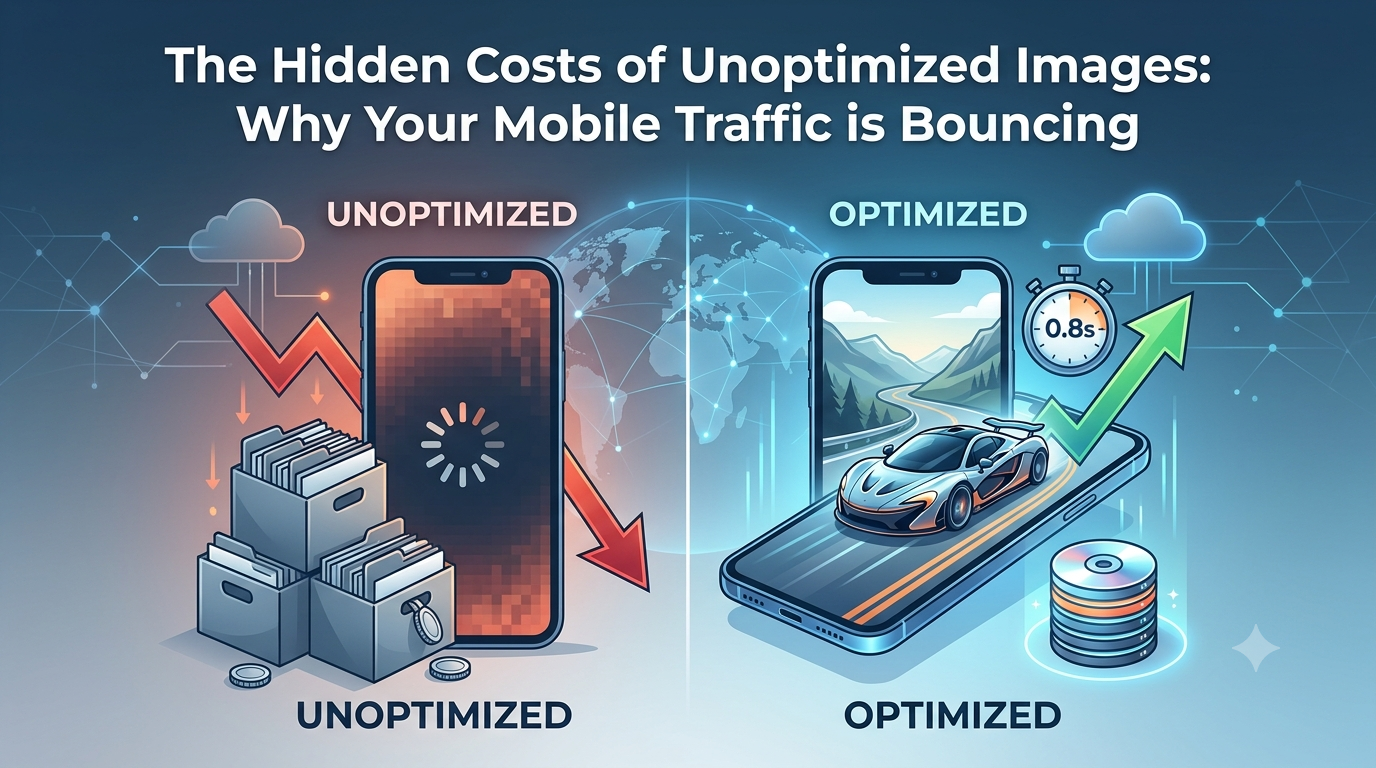
In the digital landscape of 2026, speed isn’t just a luxury—it’s a necessity. With the majority of web traffic now originating from mobile devices, users are less patient than ever. If your website takes more than three seconds to load, you aren't just losing visitors; you are losing revenue, trust, and search engine rankings.
The number one culprit for slow-loading websites? Unoptimized images.
The "Weight" of Your Website
Many website owners upload high-resolution images directly from their cameras or smartphones, often exceeding 5MB or even 10MB per image. When a user visits your site, their device has to download all that "weight" before they can see your content. This leads to higher bounce rates, SEO penalties, and increased server costs.
The Balancing Act: Quality vs. Compression
A common myth is that "optimization" means "ruining image quality." This is false. Modern compression algorithms allow you to reduce file sizes by 70-90% while keeping the image visually identical to the naked eye. The goal is to provide the smallest possible file that still looks great on the user's screen.
How to Take Control
You don’t need to be a professional developer to optimize your media. Tools like ImazeReduce allow you to quickly compress and resize your files in seconds, ensuring your site remains fast without sacrificing the visual storytelling that makes your brand unique.